And there are some seeds, that without a period of darkness and an absence of light, won't germinate at all.
It is winter and the Solstice has just passed. The shortest day is now history but the nights are still long and cold and I awake to darkness and frost and brittle grass. The winter wheat the neighbors planted went in in November and will put roots down into the cold earth--as they're more hardy in the cold than the other seeds--and will gain a head start that will mean a good crop and grain for bread and pasta in a June and July that are still a distant dream.
Fava beans and peas are also already in the ground and have sprouted but just sit there, with leaves limp and sad in the cold and damp as they will patiently wait for lengthening days and warmer temperatures to jump up and climb and unfurl leaves and tendrils.
I'm a gardener and therefore an optimist by nature. But I'm frightened by the wind and chatter now.
Things are changing that the wise farmers didn't see coming.
There are seeds that have been planted for hundreds of years that are now gone, "disappeared" by companies that bought seed houses and catalogs and made them vanish or had them re-patented so they can no longer be saved and sown by the frugal or good farmer.
And they don't tell us but the water is dirtier than it's supposed to be and the air has particles in it that are too small to be measured easily and so are declared "well-below measurable limits". So even my "organic" garden isn't. No more than anything alive is now free of radioactive isotopes from the atomic tests, bombs and nuclear disasters.
And now the chemical and oil and pharmaceutical and pesticide and seed and food companies all become one and soon it will be illegal (maybe I'm paranoid) to save seed, or plant "unapproved" varieties, or grow vegetables on unreported plots--and all in the name of "food security" or to fight "bioterrorism".
I watch the news and I read the papers but for the first time that I can remember, the people in charge want MORE oil exploration and pipelines, more mining and more ocean drilling but fewer environmental protections for the air and water or labor regulations that guarantee worker and public safety. They want no regulations to hamper business models that can be profitable only if they can shift the cost of clean up and waste removal to a distant public till and that are instead now encouraged to plunder and multiply while laws are passed that protect them, rather than us, from liability for environmental damage or pollution.
I have never been a political activist but now I have no choice. I have to join the fight to keep them from poisoning the wells, darkening the skies and making a lifeless, plastic gel of what was once the water of life or stealing the birthright of future generations, the germplasm of all the crops that have ever been sown in soil worked by honest men and women. So I am attending meetings and writing letters and supporting those that are still working to conserve and protect but I will also go back to my little plot of soil.
So I will plant a garden this spring and record in a diary the day the first anemonies flower or the grape buds swell, the day of the first asparagus on the table and the first and last of the English peas. I will plant some of the old varieties and grow food that the peasants knew and flowers that have different names in different lands. Some we eat, some I draw. As farmers have done for longer than memories can recall, we eat the stunted and challenged plants. For the best plants, strong and defiant, are allowed to set seed are not eaten but saved. They are saved for next year's seed. We select out the best, the ones that thrived in my soil and today's climate to plant next year and for the year after that, and the one after that, and so on, or so we can hope.
It is dark outside but not yet night.
I wonder what will come up in the garden this year and what will be there to harvest.
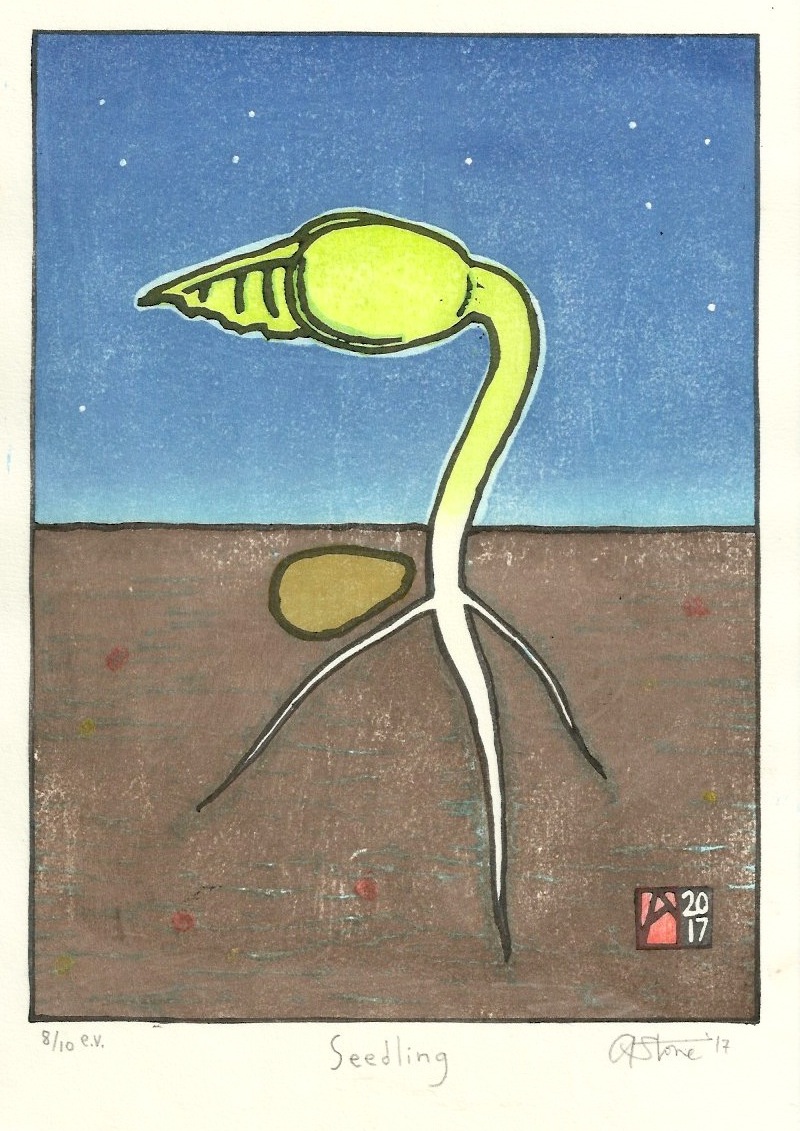
Notes; "Seedling" is a moku hanga, watercolor woodblock print. 8.25" x 11.7" and was printed from 4 blocks with 8 separate color impressions on handmade Japanese paper (Shin Hosho). e.v. 10 copies.
.